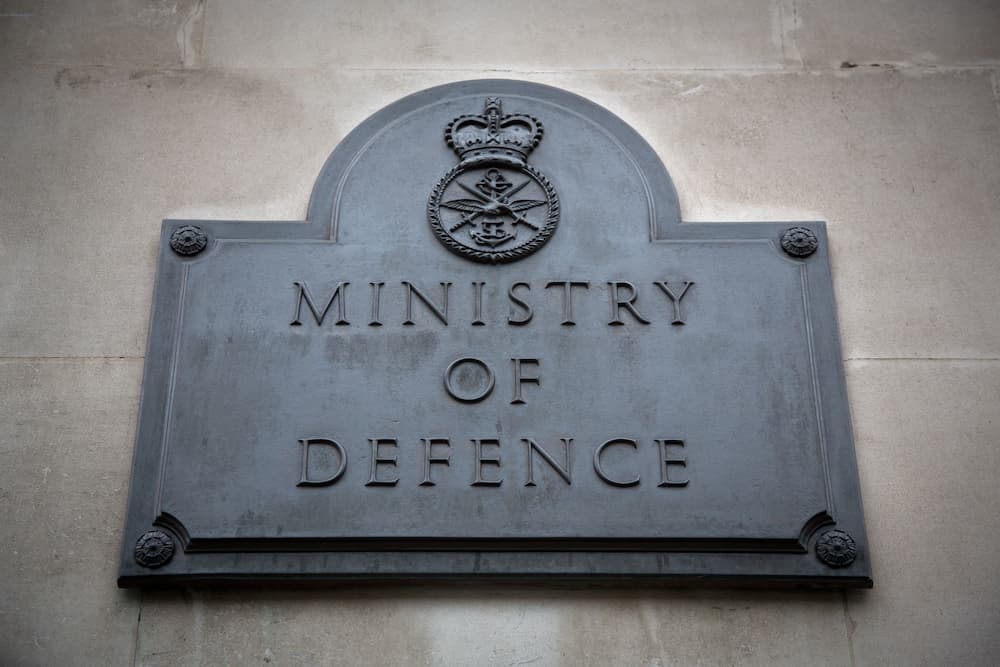
A damning report released today by the Public Accounts Committee reveals the Ministry of Defence’s (MOD) alarming failures to protect taxpayer money from economic crime and corruption.
With government spending on defence set to rise to £73.5 billion in 2028-29, it is more critical than ever that the MOD has robust controls to prevent fraud and other economic crime. Procurement is highlighted in the report as a particular area of risk, although surprisingly the parliamentary committee fails to mention the MOD’s involvement in a major corruption scandal relating to UK-Saudi arms deals.
Despite having some of the strongest anti-fraud enforcement powers of any department and its own in-house police service, the MOD has a shockingly poor track record in recovering its losses. As exposed by the National Audit Office earlier this year, a mere £6.4 million in losses through fraud was prevented or recovered by the MOD in 2024-25 – just 0.43% of the £1.5 billion the department assesses could be lost every year to fraud.
Today’s parliamentary report not only reveals how little is being recovered, but also how inefficient the MOD’s recovery efforts are. Over the last four years, for every £1 the MOD spent on counter-fraud activity, it only recovered 48p. This is a much lower financial return than other departments, and well short of the government’s expectation of recovering £3 for every £1 spent. Given that the amount spent by the MOD to prevent fraud is double what it has recovered, it raises serious questions about the effectiveness of its current anti-fraud procedures and whether it is doing enough to safeguard public money.
Answering these questions today, the parliamentary committee concluded that the MOD “has not responded to the huge potential fraud risk it faces with the degree of focus and leadership we would expect” and, even worse, that “we are not convinced that it has fully grasped the scale of the challenge”.
With the government under pressure to announce its Defence Investment Plan this month, it is vital that as part of its commitment to increase spending, it seriously shakes up the MOD’s approach to tackling economic crime. Safeguarding one of the biggest government budgets from fraud and corruption is the least that taxpayers expect, especially when they are now having to fork out even more for defence spending.
Dr Helen Taylor, Deputy Director of Spotlight on Corruption, said:
“This parliamentary report delivers an alarming verdict – the government department that is supposed to defend us from the biggest threats of our time is failing to defend its own finances against economic crime.
“With the government’s Defence Investment Plan due imminently, and spending on defence set to rise to £73.5 billion by the end of this parliament, it is more critical than ever that the MOD gets a grip on the scale of the problem and implements robust controls to stop taxpayer money being lost through fraud and corruption.”