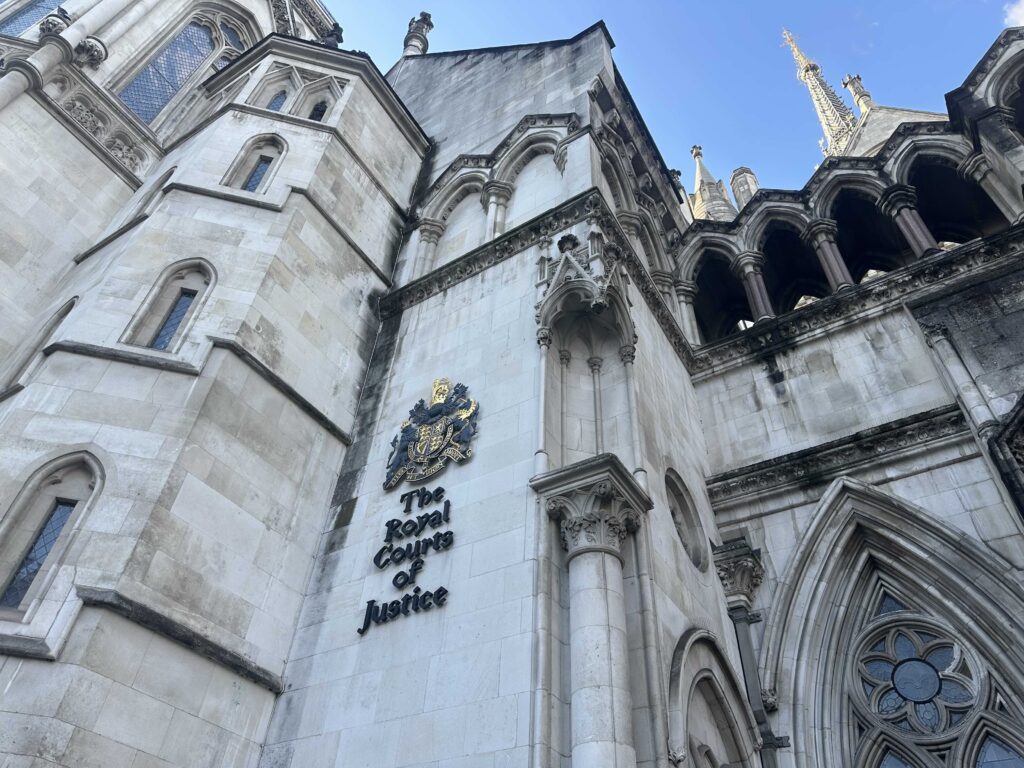
The High Court has ruled in favour of London libel firm Carter-Ruck and businessman Mohamed Amersi, dealing a major blow to the Solicitors Regulation Authority’s (SRA) powers to investigate wrongdoing by lawyers.
After hearing the parties’ arguments in July, the High Court found that the SRA does not have the statutory power to compel the disclosure of legally privileged material during its investigations into alleged professional misconduct by lawyers. The Honourable Mr Justice Butcher found that the legislation relied on by the SRA was not “compellingly clear” that privilege could be overridden by the SRA, and noted it was ultimately for Parliament to decide whether the legal regulator should now have the power it assumed it already held.
In bringing their challenge, Carter-Ruck and its former client, Mohamed Amersi, argued that section 44B of the Solicitors Act did not give the SRA the power to compel the disclosure of legally privileged material. Their case was that the SRA could only view such information if the client – who will always hold the privilege – waives this right.
Down to the wording
Despite the fact that the practical implications of this decision will reverberate across the legal sector and fundamentally disrupt the SRA’s ongoing work, the outcome turned on the interpretation of the wording of a statute .
All parties were in agreement that the section under scrutiny did not expressly allow the regulator to override legal professional privilege. So the legal battleground was actually whether the power could be said to ‘necessarily follow’ from what is expressly stated in the statute; the purpose of the statute; and some limited context when the legislation was passed from Parliamentary debates. This is a test with a high bar which the regulator could not pass.
This ruling is a huge setback for the SRA – and for the public interest – in holding lawyers to account, rendering the legal regulator as little more than a paper tiger.
Real world impact
We have previously outlined why these powers are crucial for investigations into professional misconduct when someone other than the lawyer’s client wants to make a complaint about a lawyer’s conduct. Investigations into suspected anti-money laundering breaches and abusive litigation conduct (or ‘SLAPPs’) are two such categories of cases where – to borrow the judge’s terminology – the interests of the solicitor and the client are likely to be aligned. In other words, a client would often have no interest in raising a regulatory complaint about their lawyer. There are many other scenarios which raise the same issue.
Now this outcome has been reached, the inner workings of a law firm are effectively a black box. Consequently, the SRA will struggle to do its job on these fronts, which won’t only impact future investigations, but will inevitably throw some of the SRA’s existing caseload into disarray.
Looking ahead
The SRA’s Executive Director of Investigations, Enforcement and Litigation, has confirmed that the regulator is seeking permission to appeal this outcome. While that is a welcome sign the regulator is intent on fighting to retain these crucial powers, it is clear that even a successful appeal – if and when that happens – will not fully plug this regulatory gap.
The Financial Conduct Authority (FCA) is set to take over supervision of the legal profession’s compliance with anti-money laundering rules from 2028. So far, the government has stopped short of expressly granting the FCA powers to access privileged material, which raises questions about how effective the FCA will be without access to the full picture of what firms know about their client’s risk. The High Court’s decision this week now exposes the need to tackle this head on.
Given the judge has declared that it is “ultimately, a matter for Parliament” to consider whether these powers are desirable for the SRA, our lawmakers must deal with this question in the round and review the powers of other regulators with similar responsibilities. After decades of complacency about a power assumed to exist, this judgment should be a real wake-up call for the legislature to urgently put these powers beyond doubt. Alongside this, they must construct a framework with safeguards for its proper use, such that clients’ legal privilege continues to be upheld.
The Financial Services and Markets Bill and two Private Members Bills on SLAPPs are currently being considered by MPs and Peers. These present golden opportunities to expressly empower the SRA and FCA with this power in at least two critical areas where Parliament’s attention is acutely needed to ensure lawyers can be effectively held to account by their regulators.